OB Liftoff
We have lift off. As of 1:00 PM Sunday (28th September) I finally completed stage one of the Open Baffle speaker. This is based on my experimental baffle board made from 16 mm MDF shelves from Bunnings and two large metal shelve brackets. On these I have mounted by 8″ SEAS magnesium midrange and the new Hawthorne Audio AMT-700 tweeter – if you can call a driver that runs down to 700 Hz a tweeter. Whilst I had the SEAS running by itself this really didn’t work out at all – no tops or bottom.
Now at this stage, this OB is running as a hybrid in that I am still using the Haffner with the SB Acoustic 12″ in an air suspension (closed box) cabinet of 85 L effective. This has been my main system along with the smaller 5.25″ SEAS magnesium mid-range and an Usher 1″ beryllium coated ceramic tweeter.
At this stage it is running raw with no DEQX configuration. The DEQX is being used for active crossover and level controls. I have been experimenting with a number of configurations with top end crossover at 2 kHz, 1400 kHz and lastly the recommended 700 Hz between the AMT-700 and the 8″ SEAS mid. Due to the SEAS having a bit of a rise from around 200Hz (see below) and no DEQX correction, this didn’t quite make the grade. With the AMT-700 going down to 700Hz it sounded much better.
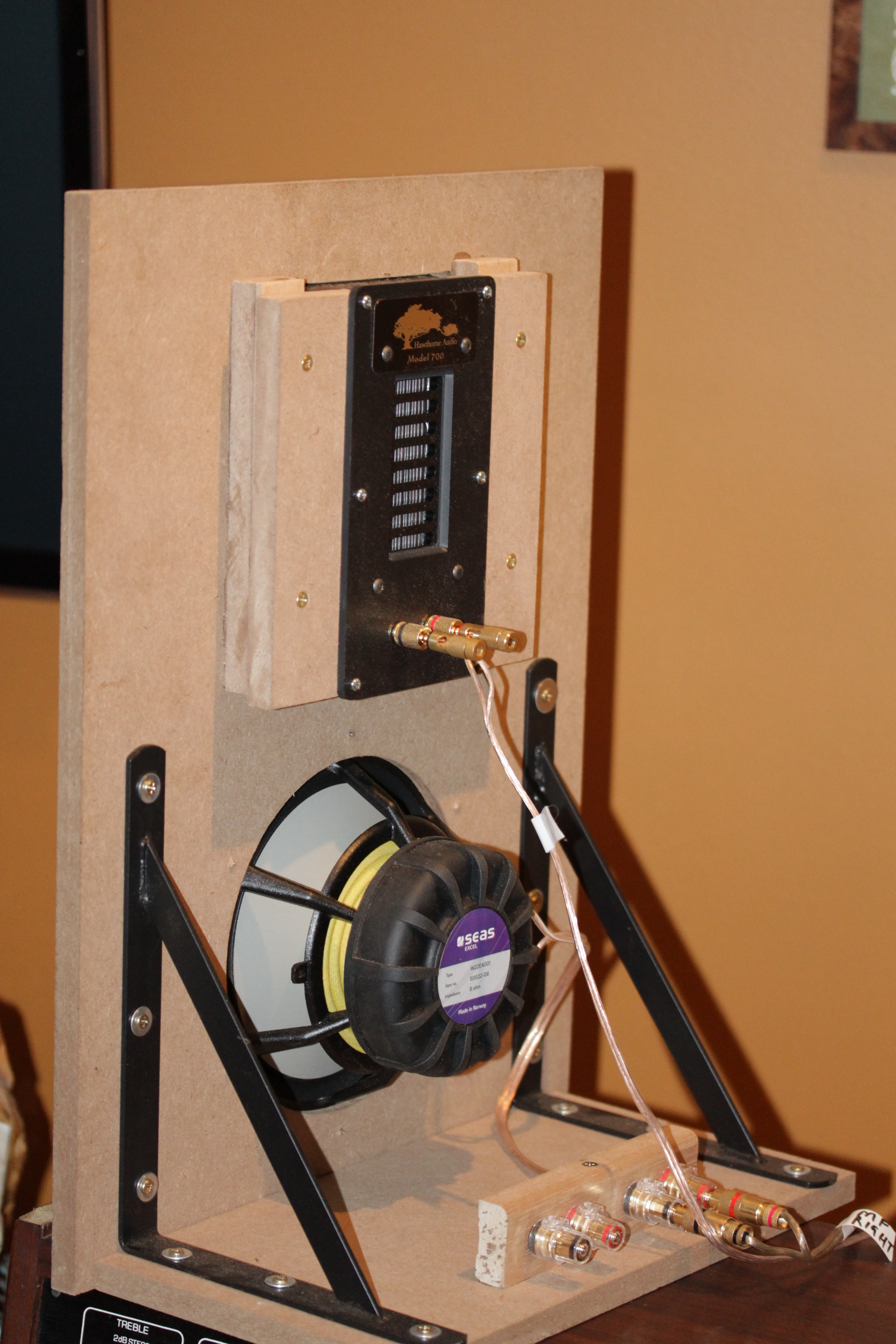
Rear of OB Experimental
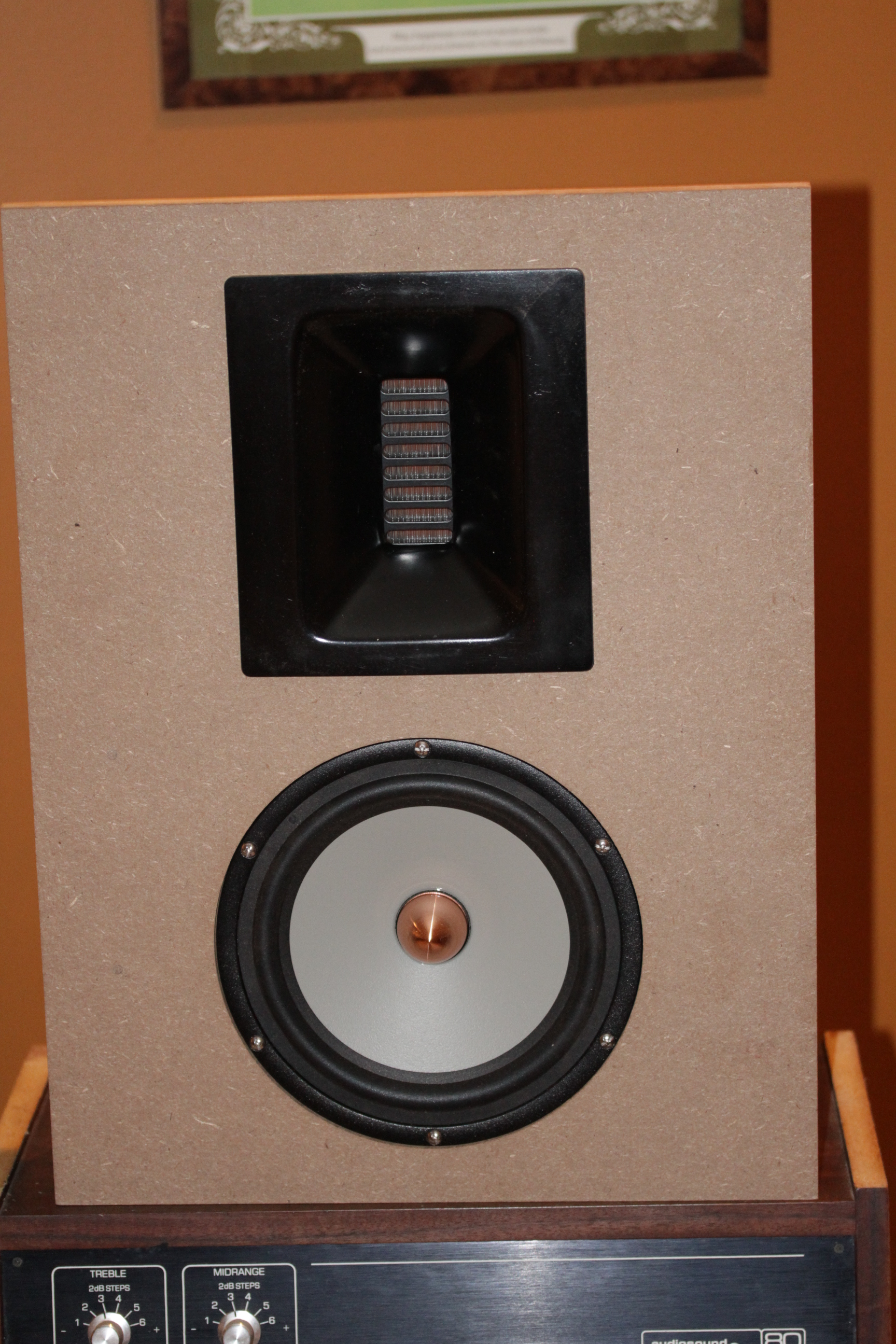
The OB expereimental front
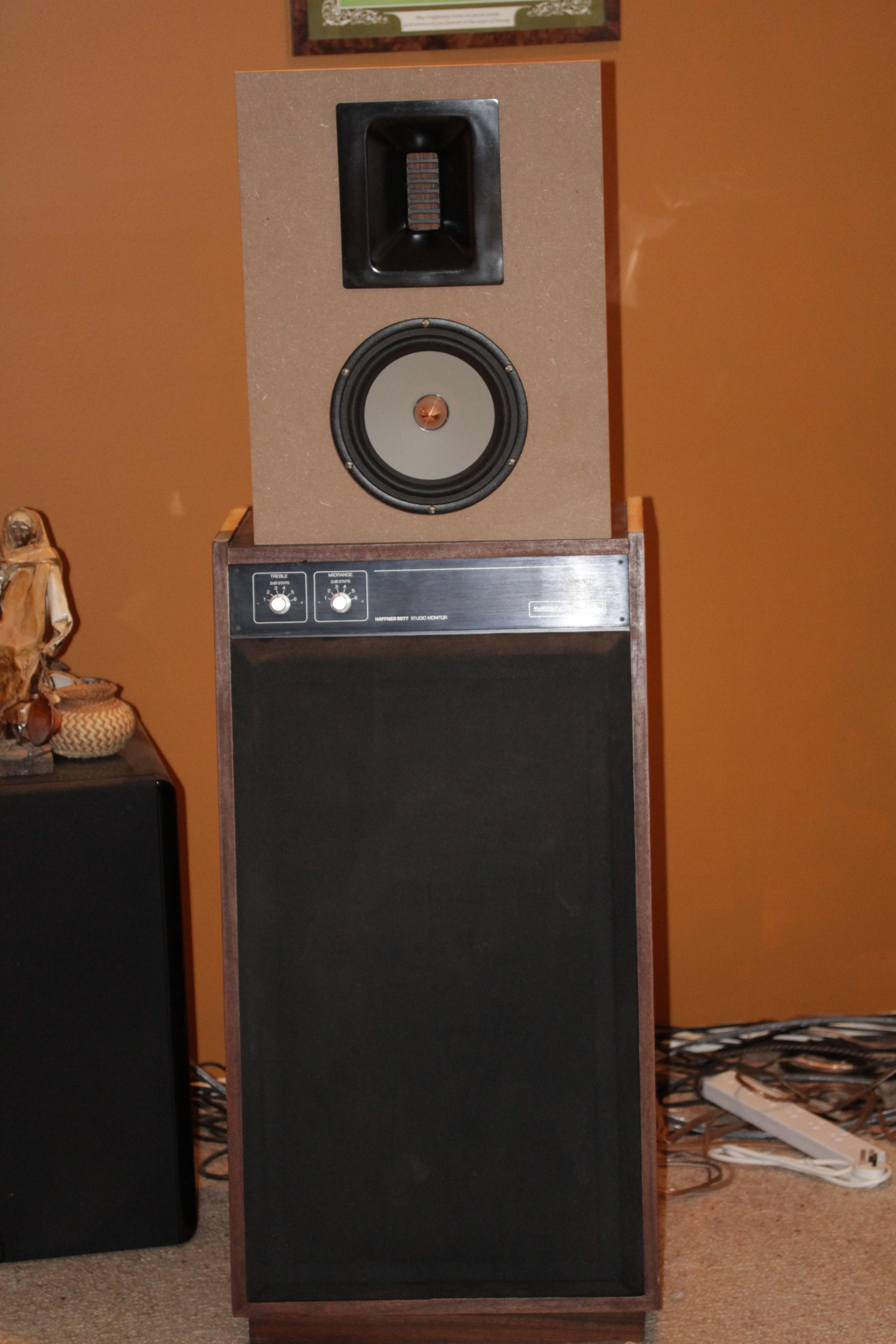
OB hybrid with Haffner
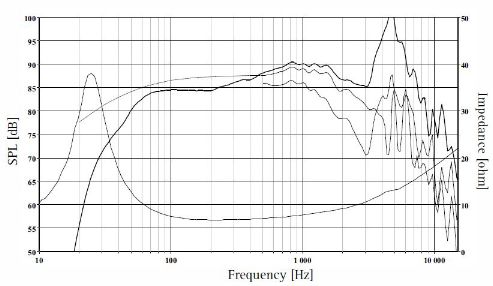
Frequency Response of SEAS W22EX001 8″ midrange with magnesium cone.
As for the bottom crossover, I started conservatively at 400Hz and quickly went to 200 Hz. I also added some parametric Eq around the 200 Hz to compensate for baffle board roll off. This is a little crude due to guess work at this time and again, it needs the DEQX configuration of the drivers to make this work correctly.
And now the fun begins.


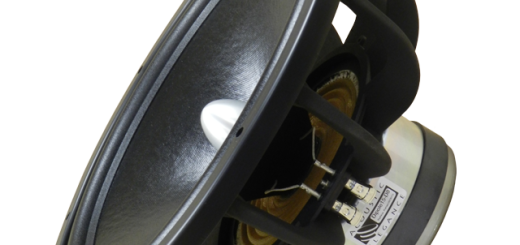
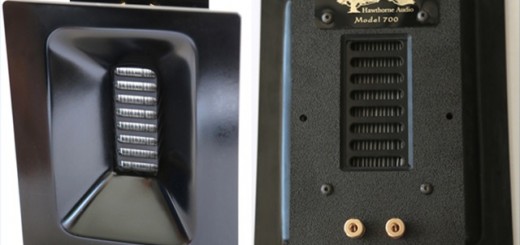
At the moment the results are very promising but also somewhat raw. It already sounds much better than I would have expected having not yet completed a DEQX run on them. What impresses is the raw power. The AMT-700 has a sensitivity of an enormous 97 dB. The midrange is quite a bit behind at 88 dB but as it is only running down to 200 Hz and not moving too much because it isn’t doing bass, even at very high levels. This all results in great dynamic range even at higher volume where the drivers are not being over driven. This then is the secret of good dynamic range, keep all your drivers easily within their power limits. One of the reasons the JBL do so good by using a 4” compression driver loaded into a horn for their midrange. That causes other problems but results in great dynamics.