There are Tweeters and then there are Tweeters
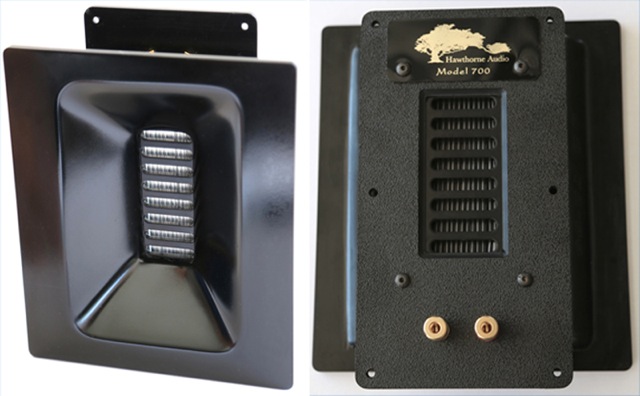
Hawthorne Audio AMT-700
This is the story of two tweeters. The first is a 1″ tweeter, common to many two and three-way speakers. The other is much less common and is an Air Motion Transformer as is being used in my Open Baffle speaker. The point of interest of this post is the frequency response of a standard 1″ dome tweeter is not actually very good. In this case I have used it in the Haffner project and crossing over very low at 2 kHz. The standard crossover used by most speakers is about 3.5 kHz. This is due to the limitations of passive crossovers that have too slow a roll off and will deliver too much midrange to the tweeter and potentially over drive it.
The point of interest is that a 1″ dome tweeter is unable to run flat from say 3 kHz all the way to 20 kHz. Its was this limitation that first lead me to consider both a smaller diameter tweeter, 3/4 inch and also a four or even five-way speaker system. By going down that path, I would have a better tweeter for the 6 to 20 kHz band (not quite a super tweeter) and then I would match that to a 2″ dome, being a true midrange, for the 2 to 6 kHz range. This than would have allowed for a lower midrange such as a 6.5 inch as is commonly used by many manufacturers (but without the 2″ and 3/4″ tweeters) to cover the range of about 300 Hz all the way to 20 kHz. A woofer would then make the fourth driver. A fifth driver could also be deployed as a subwoofer running from about 60 or 80 Hz down to 20 Hz or less.
What is to be noted here is the Hawthorne Audio AMT-700 that I am using is actual able to not only cover a much wider range of midrange but also runs from 700 Hz up to 30 kHz and it does this trick with a much flatter response than any standard tweeter could do. This can be seen in the below frequency response curves.
If this was not enough, it also does this much faster than any dome tweeter can do due to the incredible light weight of the concertina diaphragm. Even more impressive is that the surface area of the concertina design is >200 square cm, the same as a 8″ standard driver and it is 97 dB efficient. It is the large surface area also that give it the ability to run so low in the frequency range (700 Hz) in combination with the small 8 x 5 inch horn.
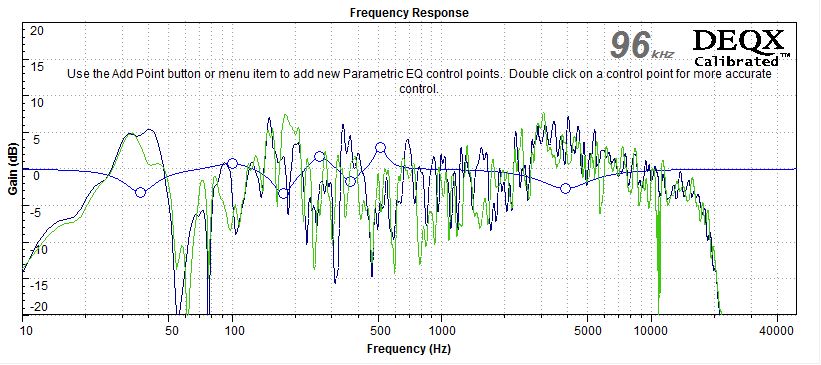
Usher Beryllium 1″ tweeter
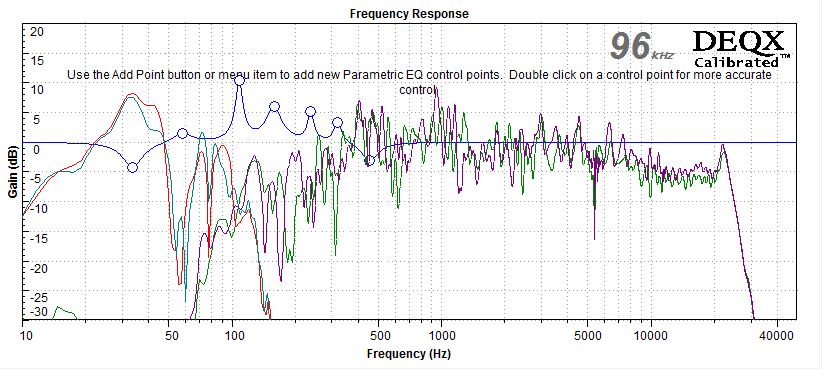
AMT-700 tweeter running 700 Hz to 40 kHz

Recent Comments